

SEO Strategy
On Building long-term
search visibility

A structured SEO framework for SMEs – built around clarity, technical foundations and authority so you’re found, understood and chosen.
In a search landscape shaped by AI, shifting behaviour and rising competition, SEO strategy cannot be a checklist. It needs to be a system – one built around clarity, structure and authority, so your brand is found, understood and chosen.
This guide explains what SEO strategy is, why it matters, and what it takes to build long-term search visibility. Each section links to a deeper specialist guide, so you can explore the areas that matter most.
“Most businesses do not need more random marketing activity. They need a clearer route to visibility, trust and enquiries.”
What is SEO strategy?
SEO strategy is the process of planning how your website will improve its visibility in search engines for the keywords and topics that matter to your business. It combines content, site structure, on-page SEO, technical SEO, internal linking and authority-building to help your website attract the right traffic and generate enquiries.


In practice, SEO strategy defines:
What your audience is searching for
and which searches lead to revenue.
SEO strategy defines:
Which pages your site needs
How each page should be structured…
to match organic search intent
and WIN the click.
It also defines:
What technical foundations must be fixed
and how you build authority over time.
Organic visibility simply means being discovered in search without paying for ads.
For business owners, that matters because it reduces reliance on paid traffic, builds trust earlier in the journey, and compounds, one strong page can generate leads for months or years.
In real terms, a good SEO strategy ensures every page has a purpose, every action supports intent, and every improvement builds on the last.
Why SEO strategy matters now
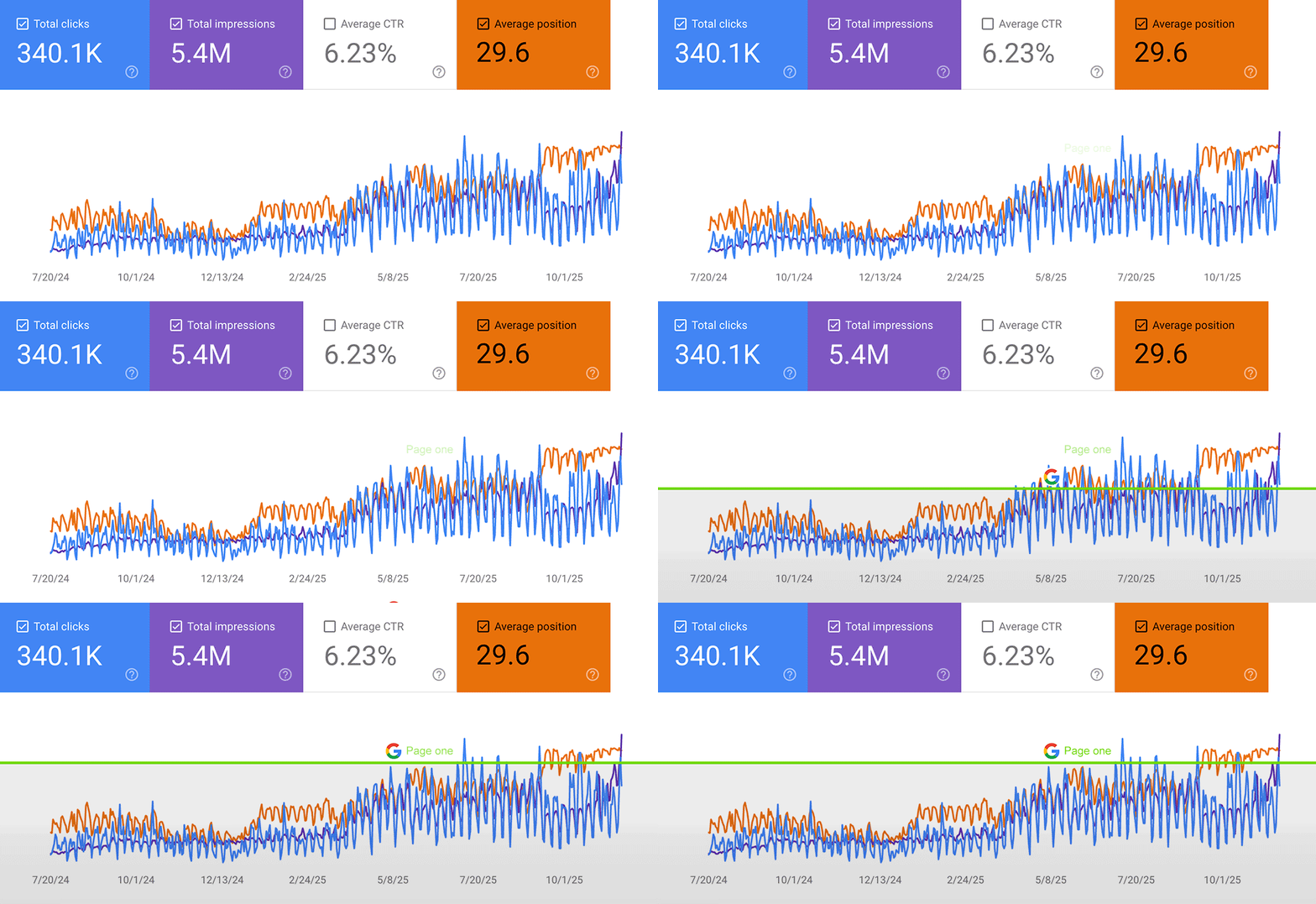
Search is no longer just a list of blue links. AI Overviews answer queries directly, click-through patterns are changing, and decision-making journeys are more fragmented than before.
To perform in search today, your SEO needs to be:
- structured, so search engines understand you clearly
- strategic, so every page exists for a reason
- seamless, so the experience feels fast, intuitive and joined up
- AI-ready, so your expertise can surface in generative summaries
- value-driven, so users choose you rather than just another result
A modern SEO strategy helps your business stay visible across the moments where decisions now happen – from Google and Maps to AI tools like ChatGPT and Perplexity.

Why SMEs invest in SEO strategy
Most SMEs do not need more disconnected marketing activity. They need a clearer route to visibility, trust and enquiries.
That is what SEO strategy provides.
A strong SEO strategy helps you understand what your audience is searching for, which pages your website needs, how those pages should work, and what technical and content improvements will move performance forward. Instead of publishing content for the sake of it, you create a system where every page has a job to do.
SMEs invest in SEO strategy because it helps them:
- attract the right traffic, not just more traffic
- appear when intent is strongest
- reduce reliance on paid ads alone
- build trust earlier in the buying journey
- turn their website into a more consistent source of enquiries
- focus time and budget on activity that supports growth

Without a strategy, SEO becomes reactive. Pages overlap, content loses purpose, technical issues go unchecked and visibility becomes harder to sustain.
With a strategy, your website becomes more than an online brochure. It becomes a structured growth asset designed to be found, understood and chosen.
With an SEO Strategy
your website becomes more than an online brochure.
It becomes a structured growth asset.
The foundations of a smarter SEO strategy
Your SEO strategy is built on five pillars. Each one plays a specific role in how search engines understand your brand and how users engage with your content.
Below is the strategic overview. Each section links to a full deep-dive guide within our SEO insights series.

1. On-page SEO: say it clearly, show it fast
On-page SEO is where strategy meets page-level clarity. It helps search engines understand your value and helps users find what they need without friction.
Good on-page SEO aligns messaging, structure and formatting so every page is easier to read, easier to index and easier to choose.
For a full breakdown of titles, meta descriptions, headings and content structure, read our complete On-page SEO guide.
2. Technical SEO: build for performance, not just appearance
Great content can underperform if the underlying structure isn’t right. Technical SEO ensures search engines can crawl, understand and rank your site effectively. It includes:
- clean code
- fast load speeds
- mobile performance
- crawl accessibility
- structured data (schema)

Technical SEO is the foundation of search visibility – and the baseline that determines whether your brand can compete.For full performance guidance, explore our dedicated Technical SEO guide.

3. Local SEO: be the trusted choice near your customer
When intent has location, relevance becomes immediate.
For service-based businesses and local SMEs, Local SEO determines:
- whether you appear in Maps
- how many reviews you have
- whether your listing builds trust
- whether customers choose you over nearby competitors
Local SEO blends your Google Business Profile, citations, reviews and local content signals.Learn how to build strong local presence in our full Local SEO guide.
4. AI Search SEO:be featured, not forgotten
AI search is reshaping how people discover information.
Google’s AI Overviews, ChatGPT, Gemini and Perplexity now deliver fast, multi-source summaries before traditional rankings.
To perform in this landscape, your content must be AI-ready:
- clearly structured
- answer-led
- formatted for summarisation
- supported by schema
- written with trust and clarity
Our full AI Search SEO guide explains how to optimise for AI-generated answers and stay visible in an AI-first world.


If you’ve noticed impressions rising while clicks fall, this isn’t a coincidence. AI Overviews often satisfy the query before users reach your site – a behaviour we break down fully in our guide to the crocodile effect in SEO. It explains why this shift happens and how smart brands adapt their strategy accordingly.

5. Content & authority – build trust over time
SEO is not a moment – it’s momentum.
Authority is built through:
- depth of content
- freshness and updates
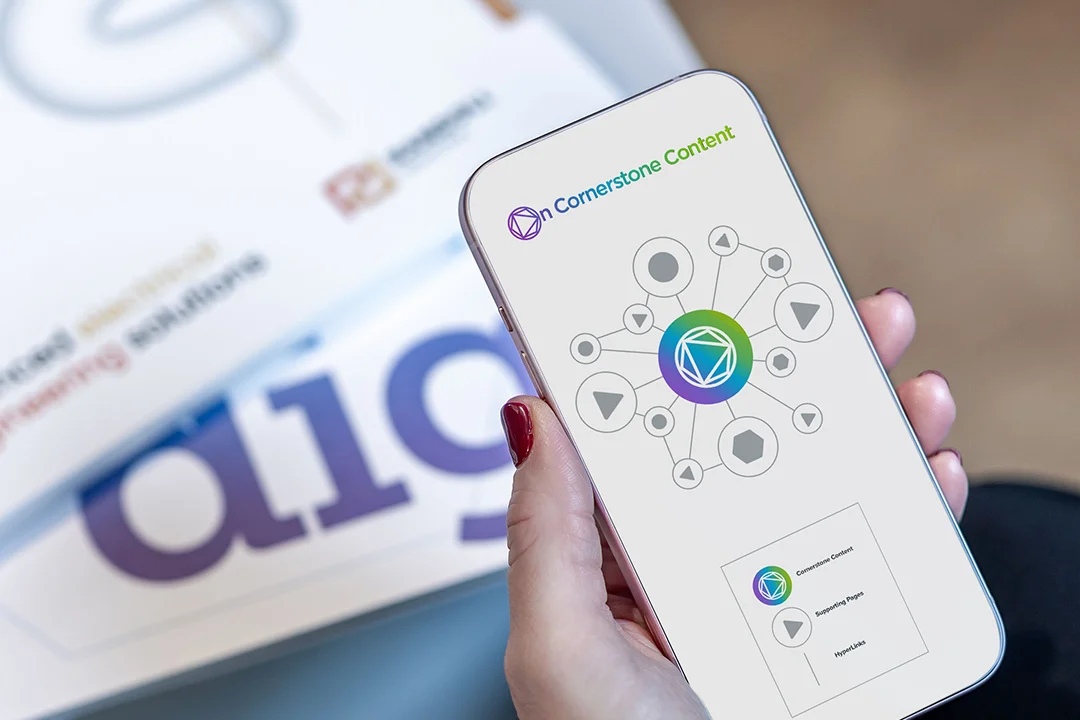
- strong internal linking
- original insights
- consistent user value
Authority determines whether search engines treat you as a reliable source, and whether AI systems choose your content when summarising information.
For a deeper look at internal linking, authority and structure, read our complete Link Juice guide.
The HeightOn approach: strategy, not shortcuts
At HeightOn, SEO is not an add-on. It is part of a joined-up system that connects brand, content, structure, performance and search intent.
Our approach blends:
- clarity – so your messaging, pages and positioning make sense
- performance – so your site is fast, crawlable and technically sound
- relevance – so each page aligns with real search intent
- authority – so trust builds through internal linking, depth and proof

We do not chase rankings for the sake of it.
We build the kind of systems that earn visibility over time — and keep supporting growth as your business evolves.
On the SEO strategy questions SMEs ask most
If you are building, reviewing or rethinking your SEO strategy, these are some of the questions worth getting clear on first. From what an SEO strategy should include to how long it can take to work, the answers below give a practical view for SMEs looking to improve visibility, attract the right traffic and generate better enquiries.
How do you build an SEO strategy?
You build an SEO strategy by identifying what your audience is searching for, mapping the pages your website needs, and improving the content, structure and technical foundations that support visibility in search.
In practice, that means starting with keyword and intent research, then deciding which services, locations, guides and proof pages your site needs to rank well and convert. From there, you strengthen on-page SEO, technical SEO, internal linking and authority so your website becomes easier for search engines to understand and easier for users to choose.
A strong SEO strategy is not built from isolated tasks. It is built as a connected system that helps your business show up for the searches that matter most.
What should an SEO strategy include?
A good SEO strategy should include keyword research, search intent mapping, site structure, page planning, on-page SEO, technical SEO, internal linking, content development and authority-building.
For most SMEs, this means understanding which keywords lead to real enquiries, creating the right pages to target them, improving headings and metadata, fixing crawl or indexing issues, and building trust through useful content, relevant internal links and strong commercial proof.
A complete SEO strategy should also define priorities. Not every SEO task matters equally, so the best strategies focus first on the actions most likely to improve visibility, traffic quality and enquiries.
Why is SEO strategy important for SMEs?
SEO strategy is important for SMEs because it helps turn a website into a more consistent source of visibility, trust and enquiries.
Without a strategy, SEO often becomes reactive. Businesses publish disconnected content, miss key search opportunities, duplicate pages, overlook technical issues and struggle to build momentum. With a clear SEO strategy, each page has a purpose, each improvement supports intent, and the website works harder as a growth asset.
For SMEs in particular, SEO strategy helps reduce reliance on paid ads alone, improve visibility for high-intent searches, and compete more effectively by being clearer, more relevant and easier to trust in search results.
How long does SEO strategy take to work?
SEO strategy usually takes time to build momentum, because search visibility improves through consistent gains rather than one quick fix.
Some technical or on-page improvements can make an early difference, especially where pages are already close to ranking well.
Stronger results, however, usually come from sustained work across content, internal linking, authority and technical SEO over several months.
The timeframe depends on your starting point, competition, website quality and how much useful content and proof already exists. In most cases, SEO strategy works best when treated as a long-term system for growth rather than a short-term campaign.
What is the difference between SEO strategy and SEO tactics?
SEO strategy is the long-term plan for improving search visibility. SEO tactics are the individual actions used to deliver that plan.
For example, your SEO strategy might define which services to target, which pages to build, which search intents matter most and how authority will grow over time. The tactics are the day-to-day actions that support it, such as rewriting a service page, improving metadata, fixing indexing issues, adding schema or strengthening internal links.
Put simply, strategy decides what matters and why. Tactics are how the work gets done.
Ready for better SEO?
Whether you are just getting started or rethinking how your business shows up in search, we can help you build the clarity, structure and strategy needed to improve visibility across Google, Maps and AI-driven discovery.
Get On. Be Found. Stay Seen.
Need more enquiries from Sussex search?
Explore our Sussex SEO plans.


Let’s talk – 01435 692 023
Horam, Heathfield, East Sussex





131 trees planted
How we’re making better choices for people, planet and purpose. Sustainability – read more
