

With 20+ years shaping brands, websites and digital systems for SMEs, Chris helps businesses turn unclear positioning into clearer identities, stronger touchpoints and better-fit enquiries.

Branding for small businesses is not about looking bigger than you are. It is about making your business easier to understand, trust and choose.
For many small and medium-sized businesses, branding starts to matter when something no longer feels aligned. The business has grown, but the brand still feels like the early version. The service has improved, but the message feels unclear. The team is strong, but the website, proposals, social media or sales materials do not reflect the quality of the work.
That is where better branding makes a measurable difference.
Strong SME branding gives your business clarity. It helps people understand what you do, why it matters, who you are right for and why they should choose you over someone else.
This guide explains how to brand a small business with clearer strategy, stronger identity, consistent branded materials and better-connected touchpoints.
If you are looking at the bigger picture, our branding agency approach explains how brand strategy, identity, design, web and digital work together to build a stronger brand system.
Contents
What is small business branding?
Small business branding is the process of shaping how your business is recognised, understood and remembered.
It includes your brand strategy, positioning, message, logo, visual identity, tone of voice, website, sales materials, customer experience and every touchpoint where someone forms an opinion about your business.
For SMEs, branding needs to be practical. It is not only about how the brand looks. It is about whether people understand your value, trust your business and feel confident enough to take the next step.
A logo is part of your brand, but it is not the whole brand. Your brand is the wider system that helps people understand:
- who you are
- what you do
- who you help
- what makes you different
- why they should trust you
- why they should choose you
For small businesses, branding has to work hard.
You may not have the biggest budget, largest team or loudest voice in the market. But with clearer positioning, stronger messaging and a more consistent brand identity, you can still compete with confidence.
Why branding matters for small businesses
Branding matters for small businesses because people make decisions quickly.
Before someone speaks to you, they may have already judged your business through your website, Google profile, social posts, reviews, brochures, proposals, signage, emails or photography.
If those touchpoints feel clear, consistent and credible, your business becomes easier to trust. If they feel unclear or disconnected, people may hesitate – even if the quality of your work is excellent.
Better branding can help SMEs:
- build recognition
- explain value faster
- create stronger first impressions
- improve trust before a conversation starts
- make sales conversations easier
- reduce confusion around services or pricing
- attract better-fit enquiries
- support higher-value work
- improve marketing performance
- give teams more confidence in how the business presents itself
Branding is not just a design exercise. It is a business tool.
It should support the way you sell, the way you communicate and the way customers feel when they come into contact with your business.
Start with brand strategy before design
One of the most common small business branding mistakes is jumping straight to visuals.
A new logo, colour palette or website can help, but only if the thinking behind it is clear. If the positioning is weak, the message is vague or the audience is poorly defined, better visuals will only cover the problem temporarily.
Brand strategy for a small business does not need to be complicated, but it does need to be clear.
Before you change how your brand looks, ask:
- What do we want to be known for?
- Who are we trying to attract?
- What type of work or customer do we want more of?
- What makes us different from other businesses in our space?
- What do customers need to believe before they choose us?
- Does our current brand reflect the business we are today?
- Does our message explain our value clearly enough?
This is where brand strategy matters.
Brand strategy gives direction to your identity, messaging, website, marketing and customer experience. It defines what your business stands for, who you need to reach, what makes you different and how your brand should show up across every channel.
For the wider strategic view, explore our branding agency approach.
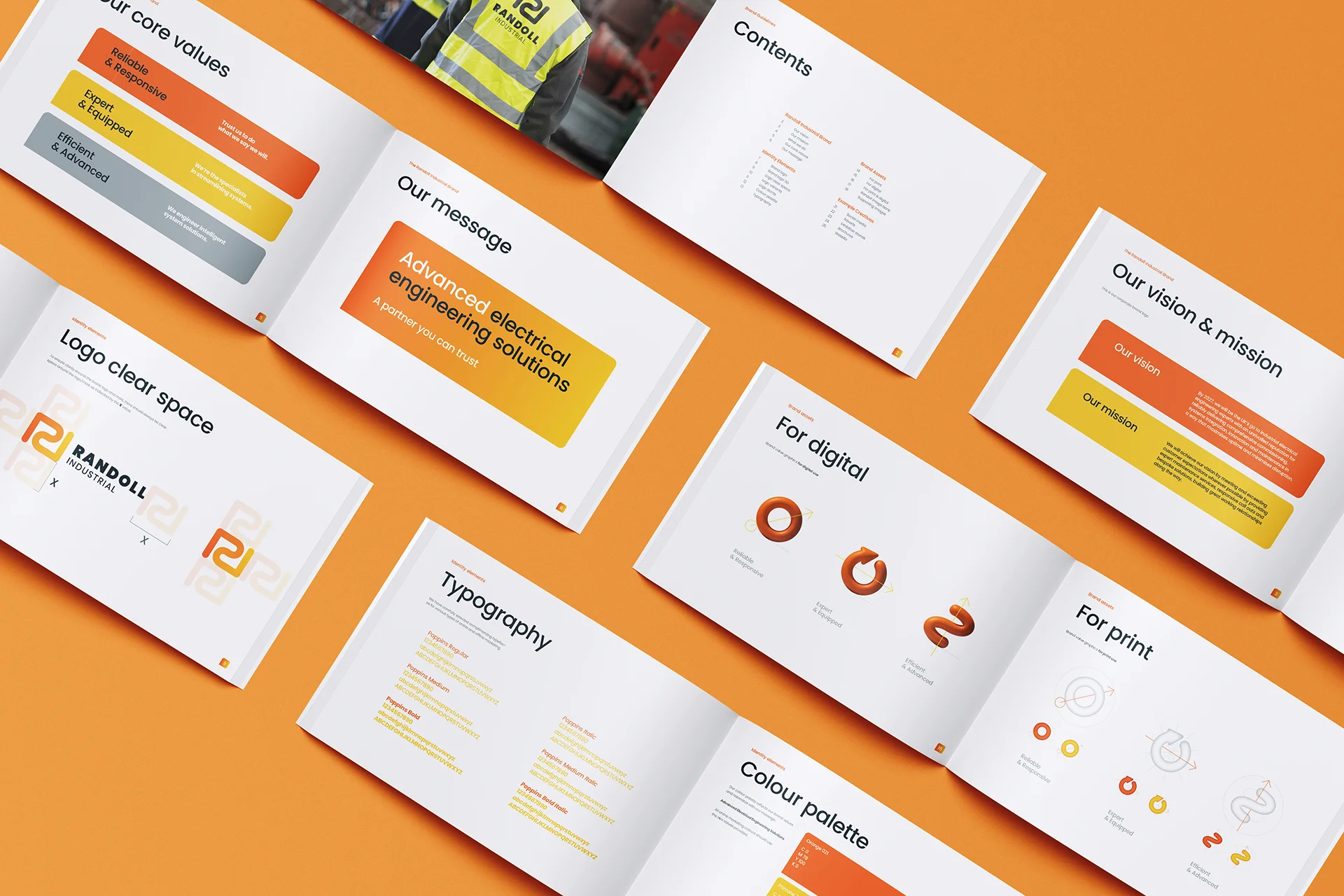
Brand guidelines for UK electrical engineers Randoll industrial
Build a simple brand identity system
A small business brand identity system gives your business the core tools it needs to show up consistently.
It does not need to be complicated, but it does need to be usable.
A practical SME brand identity system may include:
- logo design
- logo variations
- colour palette
- typography
- imagery style
- messaging
- tone of voice
- strapline or key phrases
- brand guidelines
- social templates
- email signatures
- document templates
- presentation or proposal styling
- website design direction
The aim is not to create design for the sake of it. The aim is to create a system your business can use consistently across web, print, social media, proposals, campaigns and customer communications.
A strong brand identity helps your business look more professional, but more importantly, it helps people recognise you and understand you faster.
If you need a logo, visual identity and practical guidelines, start with a brand identity design quote.
For a deeper explanation of identity systems, read Brand identity design – what it is and how it works.
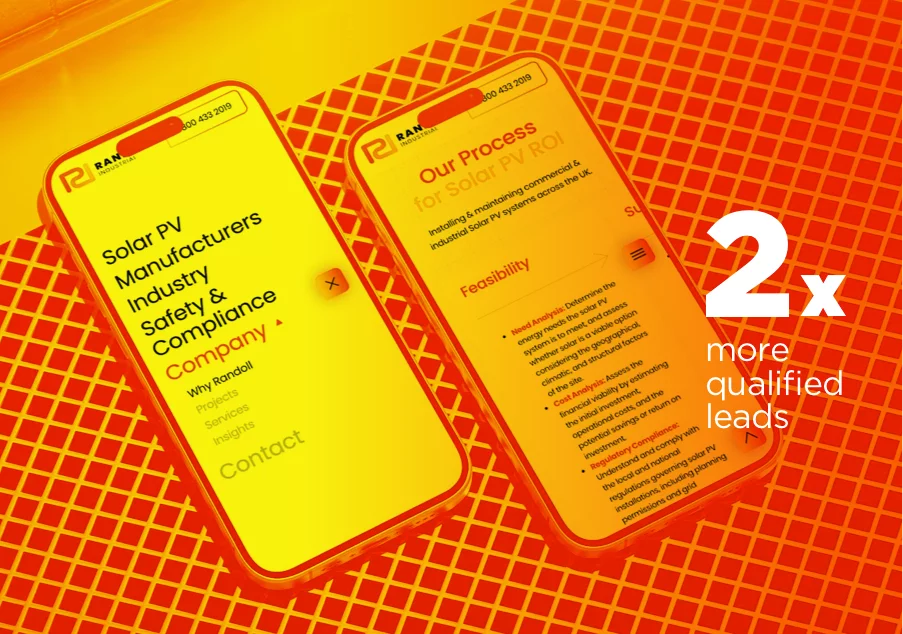
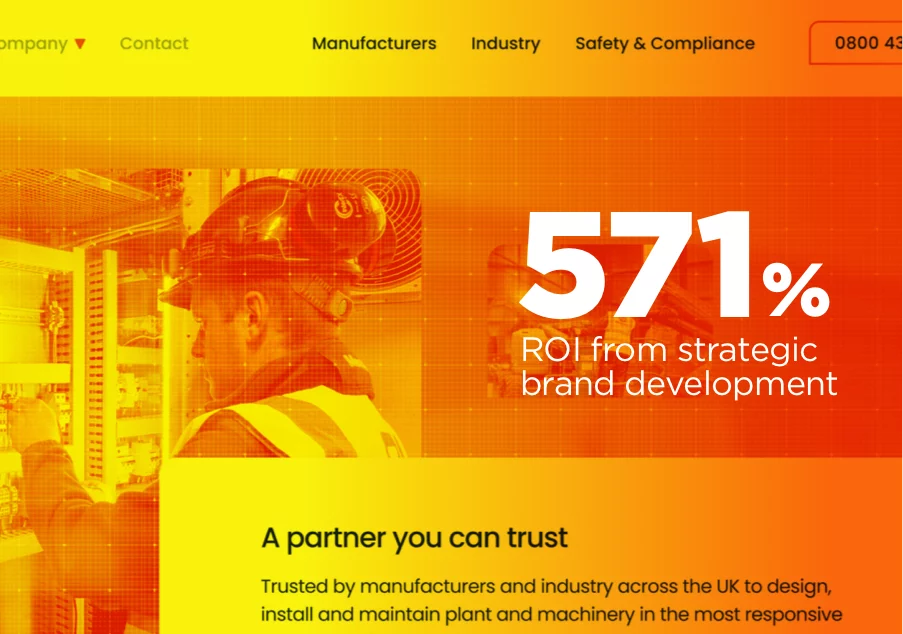
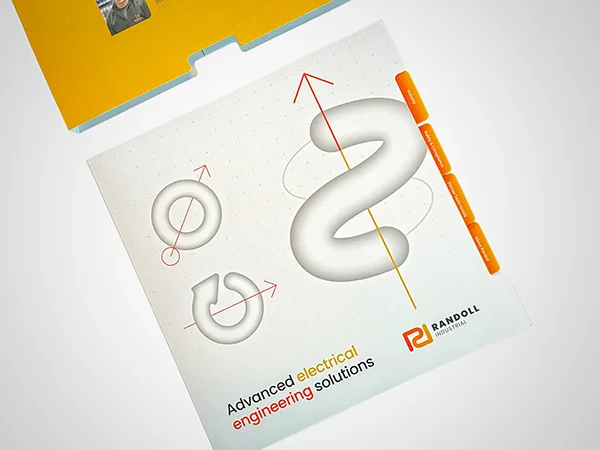
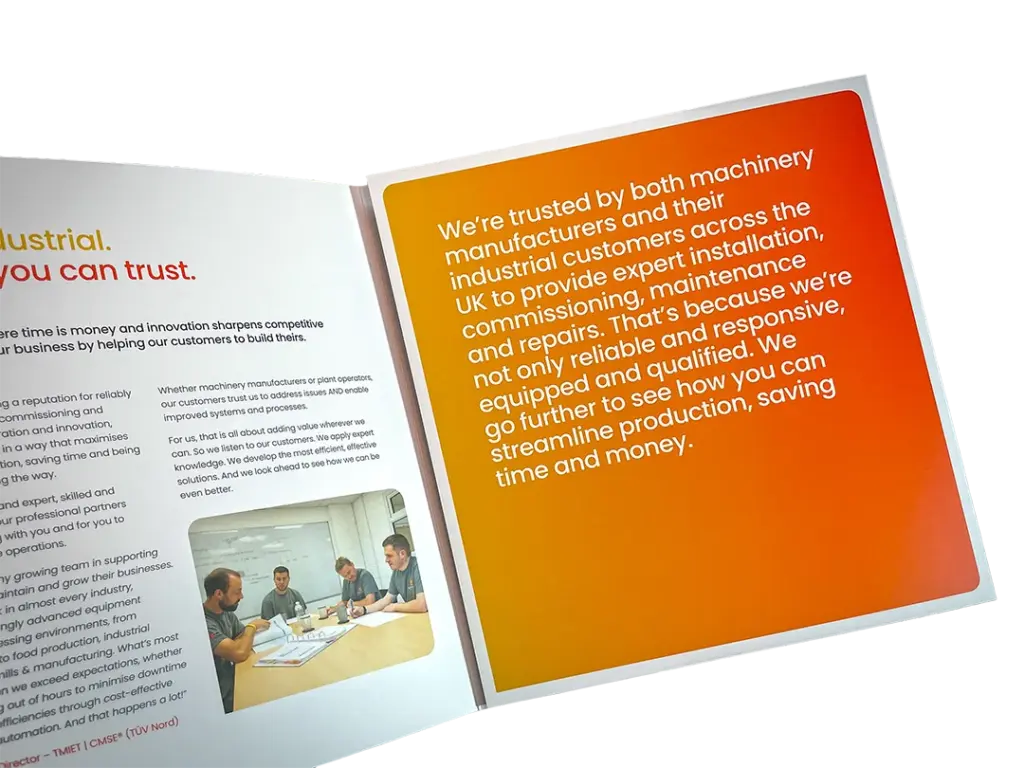
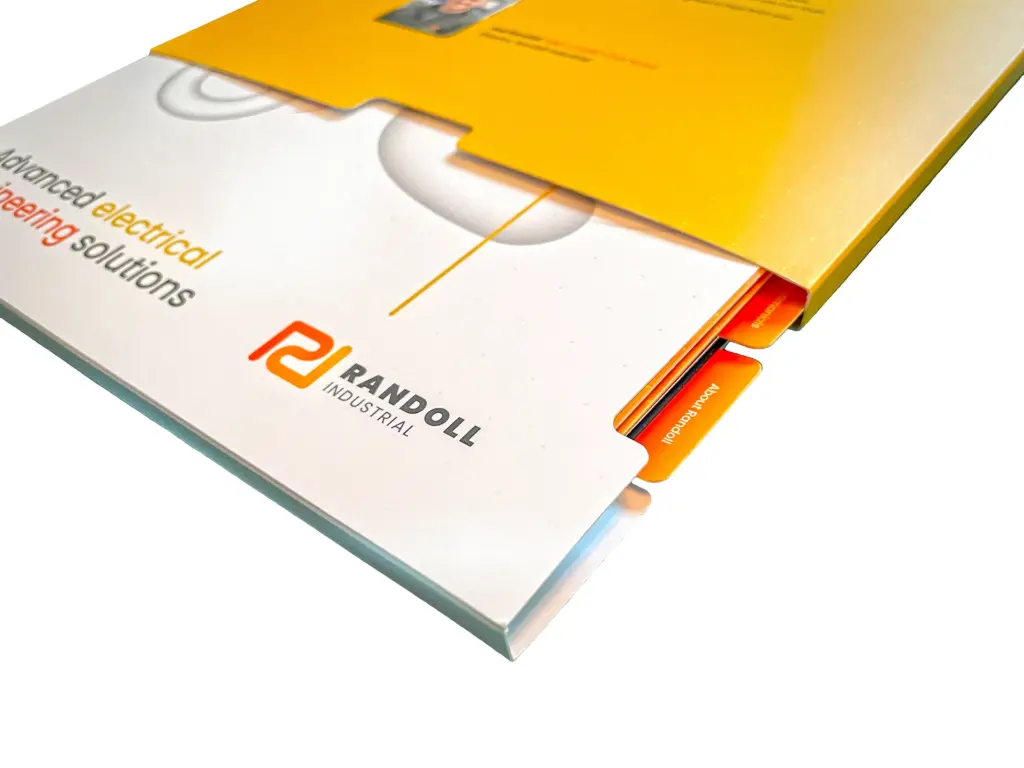
Example brand touchpoints, website (mobile and desktop) and brochure, consistently designed for Randoll Industrial Electrical Engineers.
Create consistent branded materials
Consistent branded materials help your business feel more professional across the everyday places people meet your brand.
For small businesses, these materials do not need to be complex. They simply need to feel joined up.
That might include:
- business cards
- email signatures
- proposal templates
- presentation decks
- brochures
- social media templates
- website graphics
- signage
- vehicle livery
- uniforms
- packaging
- customer documents
- lead magnets
- review request templates
- branded photography or image styles
The importance of brand consistency is simple:
People trust businesses that feel joined up.
When your branded materials look and sound like they belong together, your business feels more credible. When they feel disconnected, it creates friction.
Consistency does not mean every asset needs to look identical. It means your logo, colours, type, imagery, message and tone all feel like they are part of the same brand.
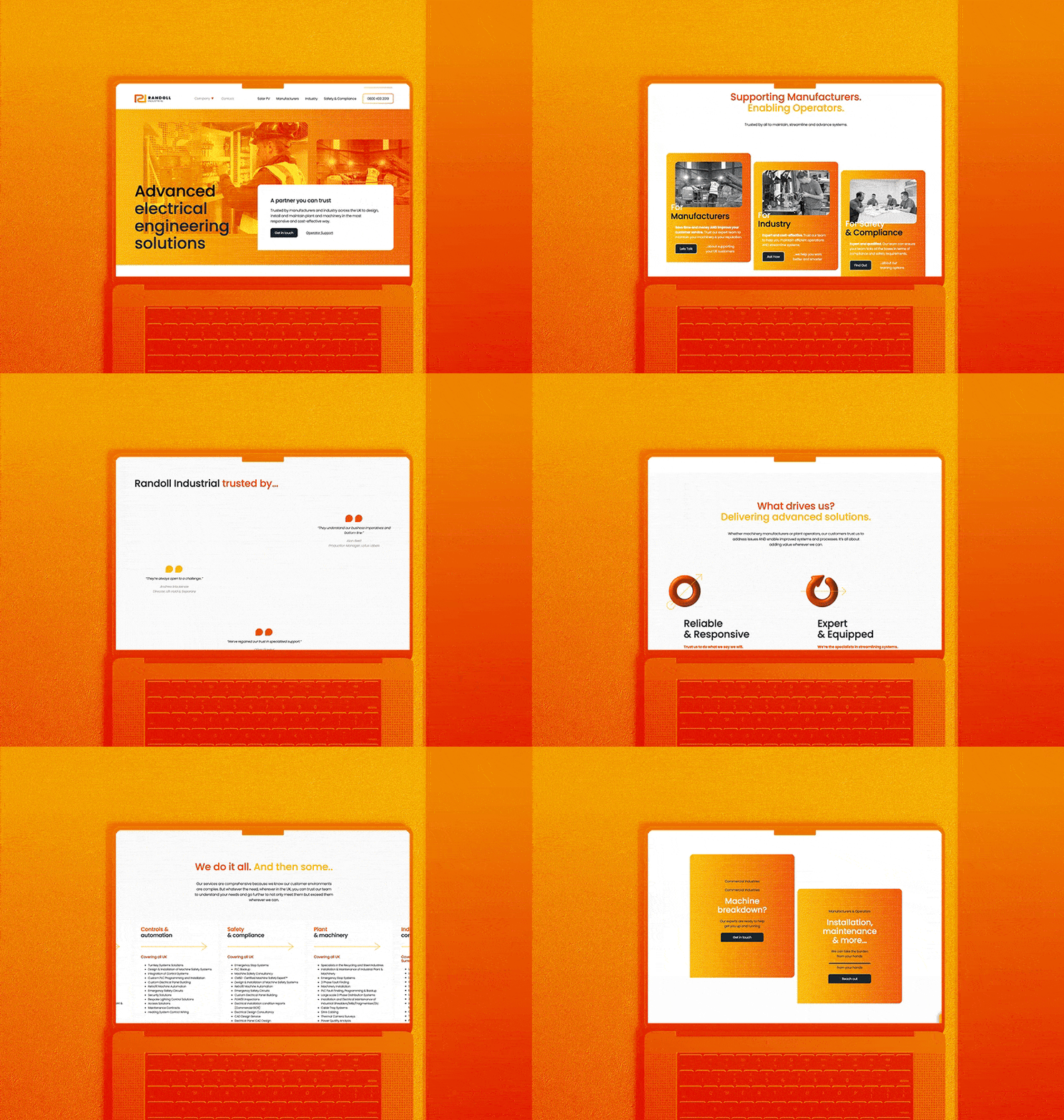
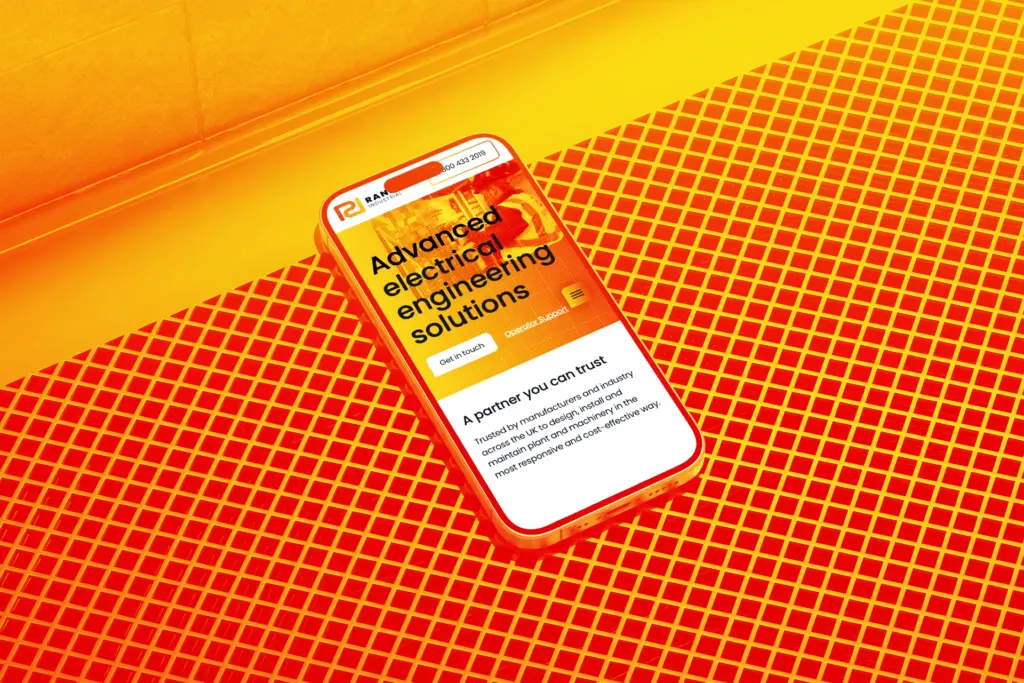
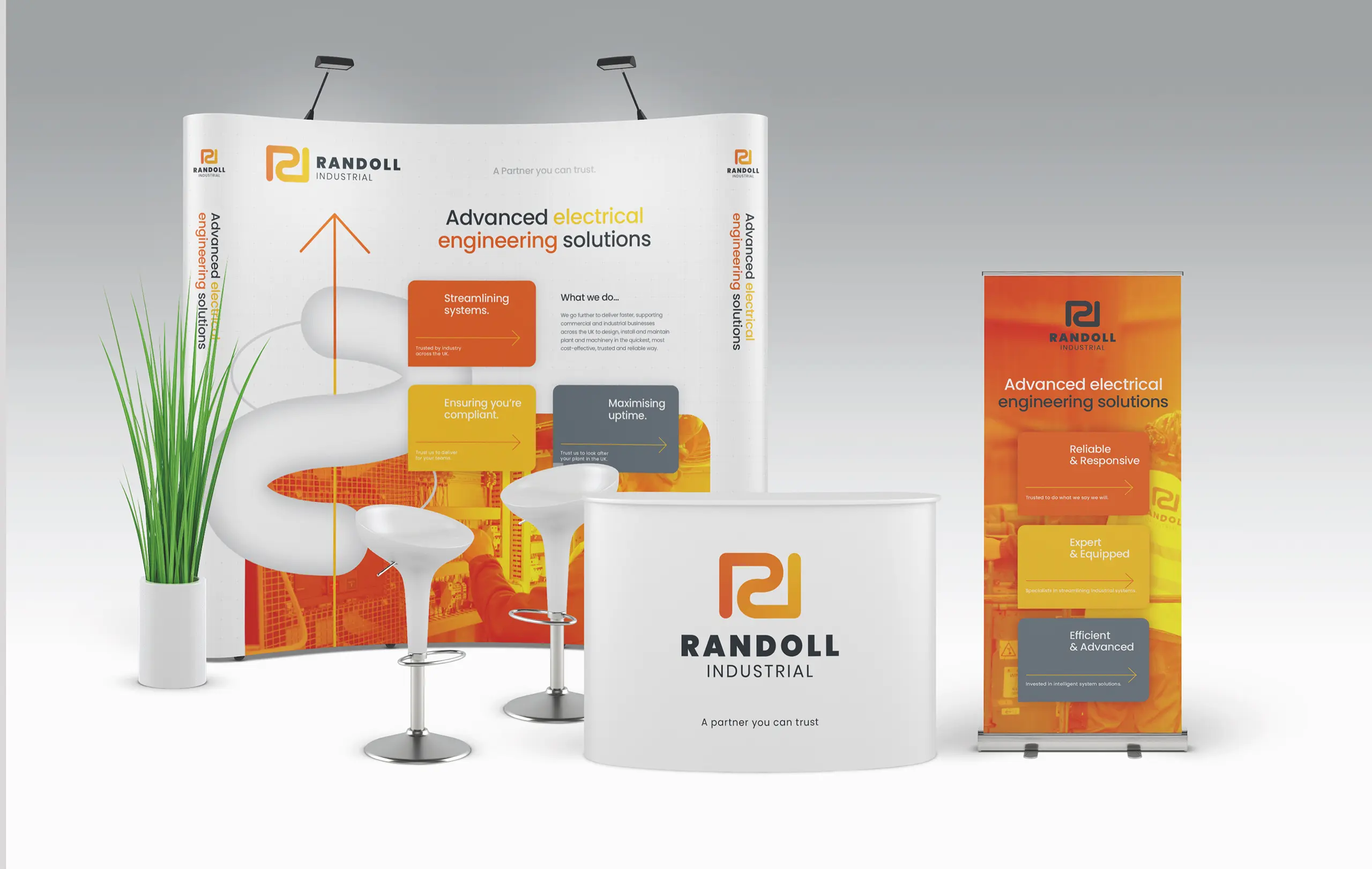
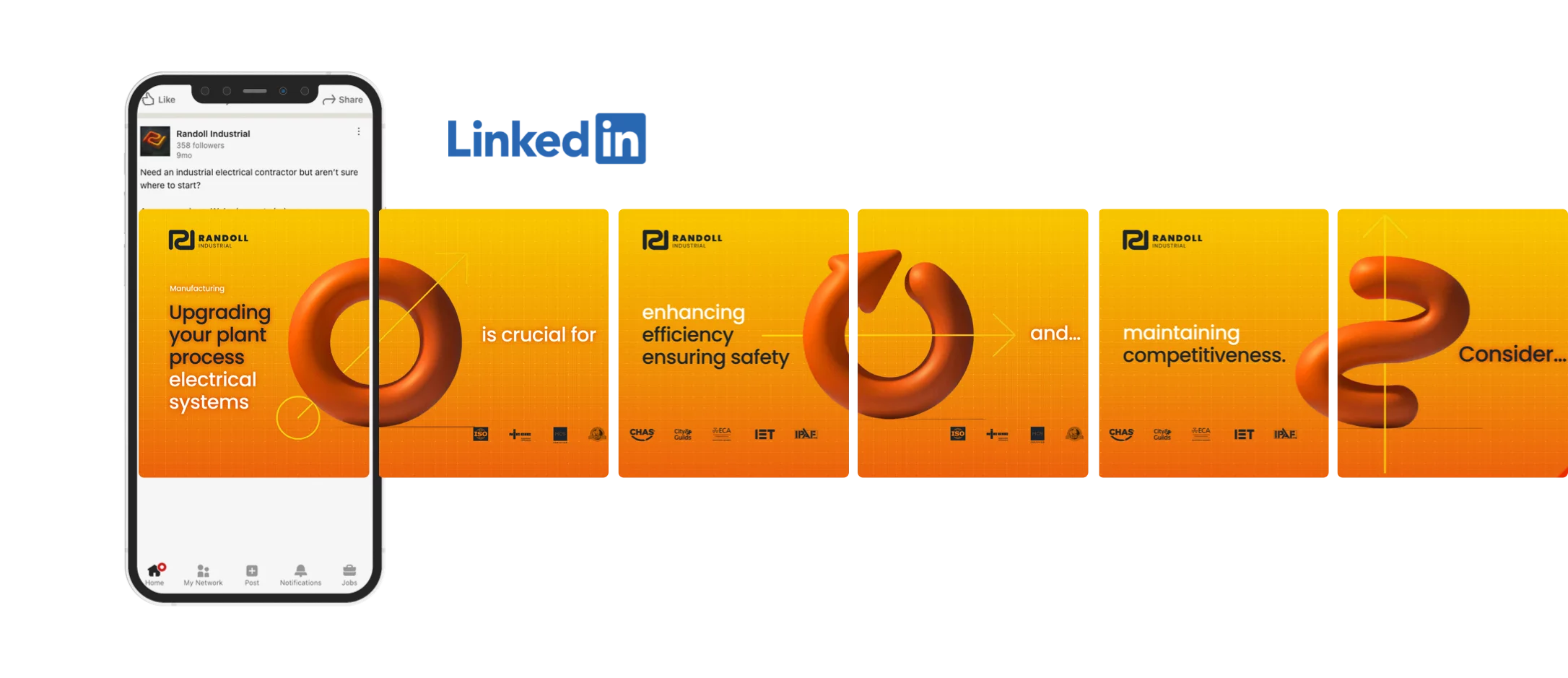
The Randoll Industrial examples below show brand consistency in practice – one identity system applied across guidelines, brochures, website design, social content and sales materials.
Keep your brand consistent across every touchpoint
Brand consistency is one of the biggest differences between a small business that feels credible and one that feels unfinished.
Your audience does not experience your brand in one place. They may find you through search, check your website, look at your social media, read reviews, download a brochure, receive a proposal, speak to your team and see your follow-up emails.
Every one of those moments shapes perception.
Your key brand touchpoints may include:
- website pages
- Google Business Profile
- social media profiles
- social posts
- email signatures
- brochures
- proposals
- pitch decks
- signage
- workwear
- vehicle livery
- packaging
- sales documents
- customer service
- review responses
- newsletters
- advertising campaigns
When those touchpoints are aligned, your brand feels more reliable and easier to remember. When they are inconsistent, it can create doubt.
That does not mean everything needs to look identical. It means everything should feel like it belongs to the same business.
To understand this in more detail, read our guide to brand touchpoints.

Use branding to attract better-fit enquiries
Good branding should not only make your business look better. It should help attract the right kind of enquiry.
For SMEs, this matters because not every lead is a good lead. If your brand is unclear, you may attract people who misunderstand your value, expect the wrong service, compare you only on price or do not fit the way you work.
A clearer brand helps filter and guide people before they contact you.
It can help communicate:
- what you specialise in
- who you are best suited to support
- the level of quality you deliver
- why your approach is different
- what kind of experience customers can expect
- whether you are the right fit
This is especially important for service-based SMEs, technical businesses, construction companies, consultants, professional firms and businesses selling higher-value work.
Better branding can help people understand your value sooner. That can make sales conversations easier, improve enquiry quality and support stronger margins.
This is where joined-up branding becomes powerful. In our work with Randoll Industrial, I saw how quickly brand clarity can change the confidence of a specialist team – not just online, but in sales conversations, brochures, LinkedIn content and customer perception.
See how we approached electrical engineering brand development for Randoll Industrial
How much does branding cost for a small business?
Many business owners search for branding packages for small business UK or branding cost for small business because they want a simple answer.
The honest answer is that the cost of branding depends on what needs to change.
A focused logo and identity project will usually cost less than a full brand transformation involving strategy, messaging, website design, content, launch activity and digital rollout.
For example, a small business branding package may include:
- logo design
- visual identity
- colours and typography
- brand guidelines
- social media templates
- document templates
- tone of voice
- website design direction
- branded sales materials
A fuller rebrand may include:
- brand strategy
- repositioning
- naming
- messaging
- brand identity design
- website design
- SEO and content planning
- launch marketing
- campaign rollout
The right route depends on your business, your goals and what needs to change.
If you need a logo, visual identity and brand guidelines, start with a brand identity design quote.
If your business needs a wider strategic reset, explore Brand Transformation.
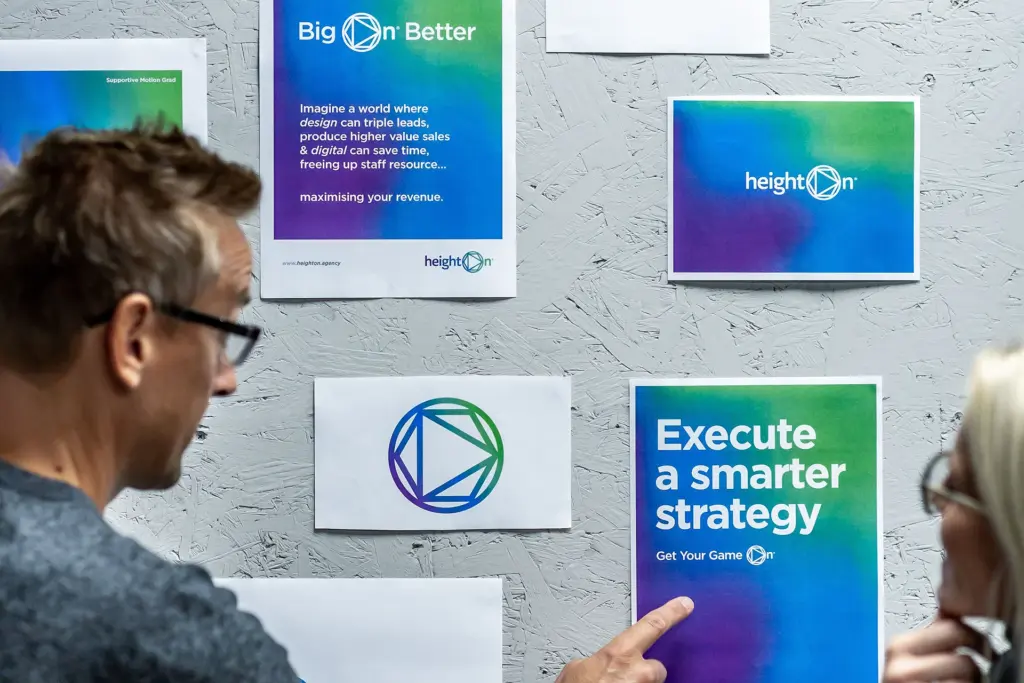
When should a small business rebrand?
Not every small business needs a full rebrand.
Sometimes you need a clearer message. Sometimes you need better brand guidelines. Sometimes you need a stronger website. Sometimes you need a refreshed identity. And sometimes the whole brand needs to be repositioned.
A small business rebrand may be worth considering if:
- your brand no longer reflects the quality of your work
- your business has changed but your identity has not
- your services have evolved
- your audience has shifted
- your website feels disconnected from your current offer
- your team struggles to explain what makes you different
- your competitors look more credible
- you are attracting the wrong type of enquiry
- you are preparing for growth, acquisition, launch or repositioning
- your sales materials do not support the value you deliver
A strong rebrand is not just a new look. It is a strategic reset that brings positioning, messaging, identity, website and marketing back into alignment.
If your business has outgrown its current brand, explore our brand transformation service.
Common small business branding mistakes
Treating the logo as the whole brand
Your logo matters, but it is only one part of your brand. The strongest SME brands connect logo design with messaging, identity, website, tone of voice and customer experience.
For a deeper look at how professional logo design creates recognition, trust and impact, read On Business Logo Design.
Trying to appeal to everyone
A brand that tries to speak to everyone often connects strongly with no one. Clearer audience focus makes your message sharper and your marketing more effective.
Changing visuals without fixing the message
If people do not understand what you do or why you matter, a new look alone will not solve the problem. Start with clarity.
Letting every touchpoint drift
Small inconsistencies add up. Old logos, mixed colours, different fonts, unclear tone and inconsistent proposals can weaken trust over time.
Hiding the value
Many SMEs are excellent at what they do but poor at communicating why it matters. Strong branding helps turn expertise into clear, customer-facing value.
Waiting too long to evolve
Brands are not fixed forever. As your business grows, your brand should evolve with it. The key is to evolve with purpose, not react in panic.

On Experience: what I see most often with SME branding
After more than 20 years working with growing businesses, the branding problem I see most often is not a bad logo. It is a lack of clarity.
Many SMEs are excellent at what they do, but the value is hidden. The business has grown through referrals, relationships and reputation, but the brand has not kept up. The website says one thing, the sales materials say another, and the visual identity no longer reflects the quality of the work.
That is usually when branding starts to matter properly.
In my experience, the strongest SME brands are not always the loudest or most polished. They are the clearest. They know who they are for, what they want to be known for and how to show up consistently across the places customers make decisions.
That is why I always encourage businesses to start with the thinking before the visuals. A better logo can help, but a clearer brand gives the logo something stronger to stand for.
Branding for specialist SMEs
Some SMEs need branding that does more than look professional. They need branding that makes specialist knowledge easier to understand.
This is especially true for businesses in sectors such as construction, engineering, property, recruitment, technology, manufacturing and professional services.
When your offer is complex, technical or relationship-led, clear branding helps customers understand your value sooner. It can also support better enquiries, stronger proposals and more confident sales conversations.
For sector-specific examples, explore how we approached branding for builders, branding for electrical engineers and branding for surveyors.
On Better: how HeightOn helps SMEs build stronger brands
HeightOn helps ambitious SMEs build better brands with clarity, consistency and commercial purpose.
We connect strategy, identity, design, web and digital so your brand works harder across the places people actually meet your business.
Depending on what you need, our branding work can include:
- brand strategy
- brand positioning
- messaging and tone of voice
- logo and visual identity
- brand guidelines
- website direction
- brand touchpoints
- sales materials
- campaign rollout
- digital marketing support
- ongoing brand development
Some businesses need a full strategic reset. Some need a clearer identity system. Others need better consistency across their website, proposals, social media and customer journey.
The right route depends on what needs to change.
To explore the full joined-up approach, visit our branding agency approach.
If you need a full rebrand, see Brand Transformation.
If you need a logo, identity system and guidelines, start with a brand identity design quote.
Build a small business brand that works harder
Branding for small businesses is not about making your business look bigger. It is about making your business clearer, more credible and easier to choose.
Start with what you want to be known for. Clarify who you are trying to reach. Build an identity system that reflects your value. Apply it consistently across every touchpoint. Then keep refining it as your business grows.
Better branding helps good businesses show up properly.
And when your brand is easier to understand, trust and choose, everything else becomes easier to sell.
Latest Articles

Branding for small businesses
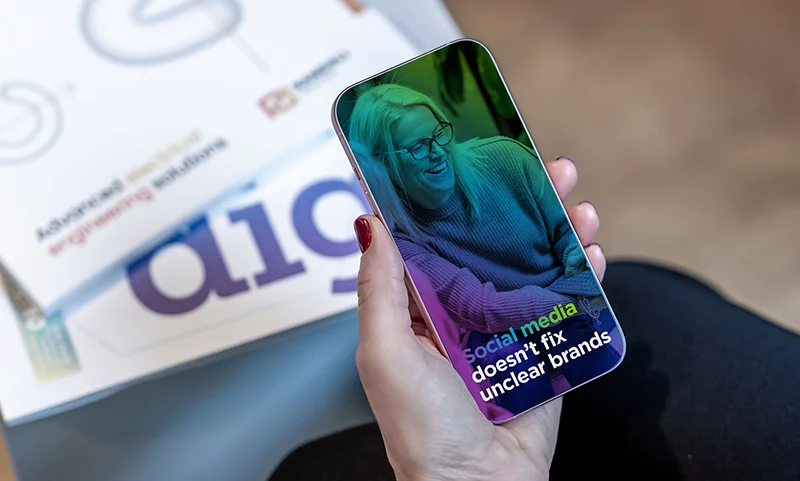
Why social media is only as strong as your brand
On Brand Touchpoints: what they are & why you need them

Let’s talk – 01435 692 023
Horam, Heathfield, East Sussex





131 trees planted
How we’re making better choices for people, planet and purpose.
On Sustainability – read more
